
Tachymeter, Telemeter, Pulsometer: Decoding the Chronograph’s Scales
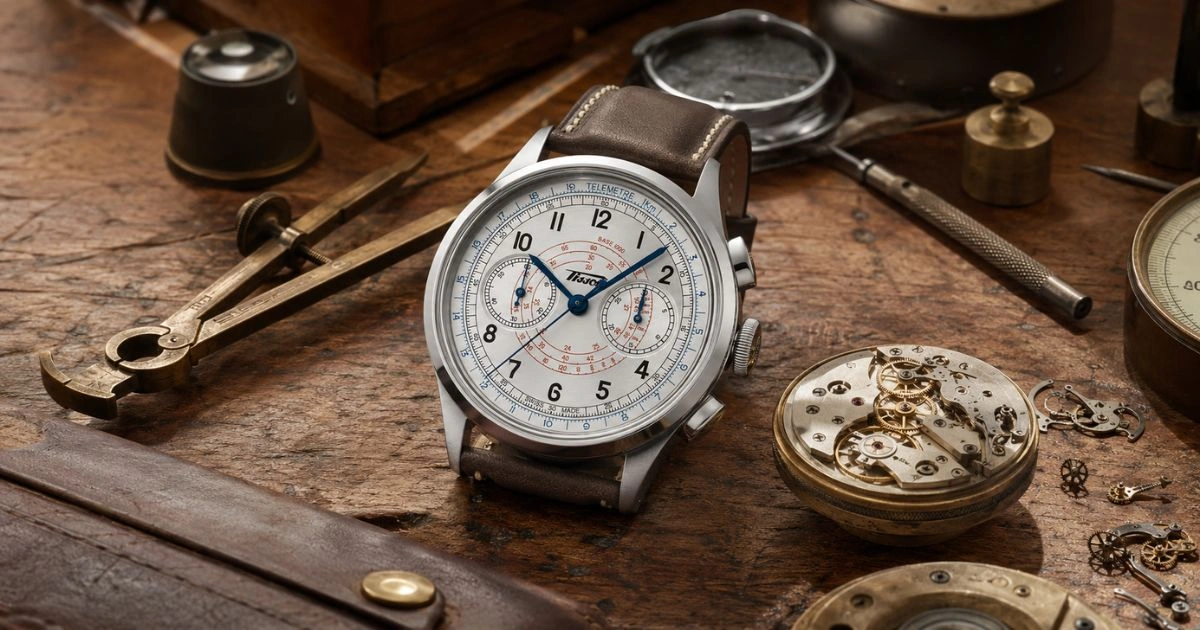
At first glance, a chronograph with multiple scales can look like the cockpit of a vintage aircraft—intimidating, intricate, and undeniably cool. Yet many of us wear these watches purely for their aesthetic, never tapping into the incredible analog computing power sitting right on our wrists.
These scales aren’t just decorative. They tell a story of an era when mechanical watches were essential tools for professionals who needed to perform real-world calculations without a smartphone in their pocket. Let’s decode three of the most common chronograph scales and discover what makes them genuinely fascinating.
The Tachymeter: Measuring Speed and More
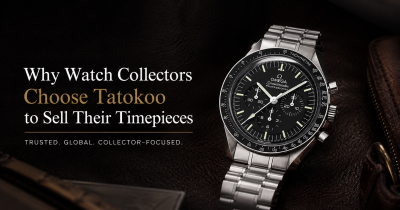
The tachymeter is by far the most commonly encountered scale on chronographs, gracing icons like the Omega Speedmaster and Rolex Daytona. At its core, a tachymeter converts elapsed time into speed based on a known distance, typically one mile or one kilometre.
How to use it: Start the chronograph when a moving object—say, a car—passes a starting point, and stop it when it travels a predetermined distance. The chronograph seconds hand will point to a number on the tachymeter scale, indicating the speed in units per hour. For example, if a car takes 30 seconds to travel one kilometre, the seconds hand stops at 120—meaning an average speed of 120 km/h.
Beyond speed: Here’s where it gets interesting. A tachymeter can measure any event per hour. Suppose a machine in a workshop produces one component every 45 seconds. Stop the chronograph at 45 seconds, and the tachymeter scale reads approximately 80—meaning the machine produces about 80 parts per hour. This versatility made it invaluable in industrial and engineering settings during the mid-20th century.
You can also use a tachymeter to measure distance if you maintain a constant speed. Set the chronograph running, stop it when the seconds hand reaches your speed on the scale, and you’ve covered one unit of distance—simple but clever.
The Telemeter: Gauging Distance Through Sound and Light
While tachymeters measure speed, telemeters measure distance—specifically, your distance from an event you can both see and hear. This scale is less common but arguably more poetic, with origins in military applications where soldiers needed to calculate the distance to artillery fire.
How to use it: When you see a flash of lightning (or a muzzle flash), start the chronograph. When you hear the corresponding thunder (or the sound of the shot), stop it. The chronograph hand points to your distance from the event on the telemeter scale.
The scale is calibrated based on the speed of sound (approximately 343 metres per second through air at 20°C). The result is displayed in miles or kilometres, depending on the watch. It’s a practical and dramatic demonstration of the speed difference between light and sound—and a surprisingly useful tool for gauging whether a storm is moving towards you or away from you.
The Pulsometer: The Doctor’s Tool
The pulsometer scale is a medical instrument designed for healthcare professionals, first appearing in the 1920s. It allows the wearer to quickly measure a patient’s heart rate with minimal counting.
How to use it: Start the chronograph and count the patient’s heartbeats until you reach the number for which the scale is calibrated—typically 15 or 30 beats. Stop the chronograph at the 15th or 30th beat, and the seconds hand points directly to the beats-per-minute rate on the pulsometer scale.
This is particularly useful for measuring rapid heart rates that would be difficult to count accurately over a full minute. Watches like the Longines Pulsometer Chronograph and specific versions of the A. Lange & Söhne 1815 Chronograph feature this fascinating scale.
All-In-One Wonders
Some timepieces, like the Omega Speedmaster Chronoscope and Patek Philippe’s ref. 5975, feature all three scales on a single dial—a true feast for the eyes and a testament to analog ingenuity. These watches often feature a “snail” design, with scales spiralling inward from the bezel to the centre.
A Final Thought
Today, our phones can perform these calculations instantly, and no one needs a telemeter to know if a storm is approaching. But that’s precisely the point. These scales are not just historical relics; they represent a time when craftsmanship and practicality went hand in hand. They are the soul of the chronograph, making it a tool watch rather than merely a fashion accessory. Mastering these scales deepens your connection to the watch and helps you appreciate the ingenuity of the engineers who designed them.