
The Art of Fusion: What Makes Hublot Truly Unique
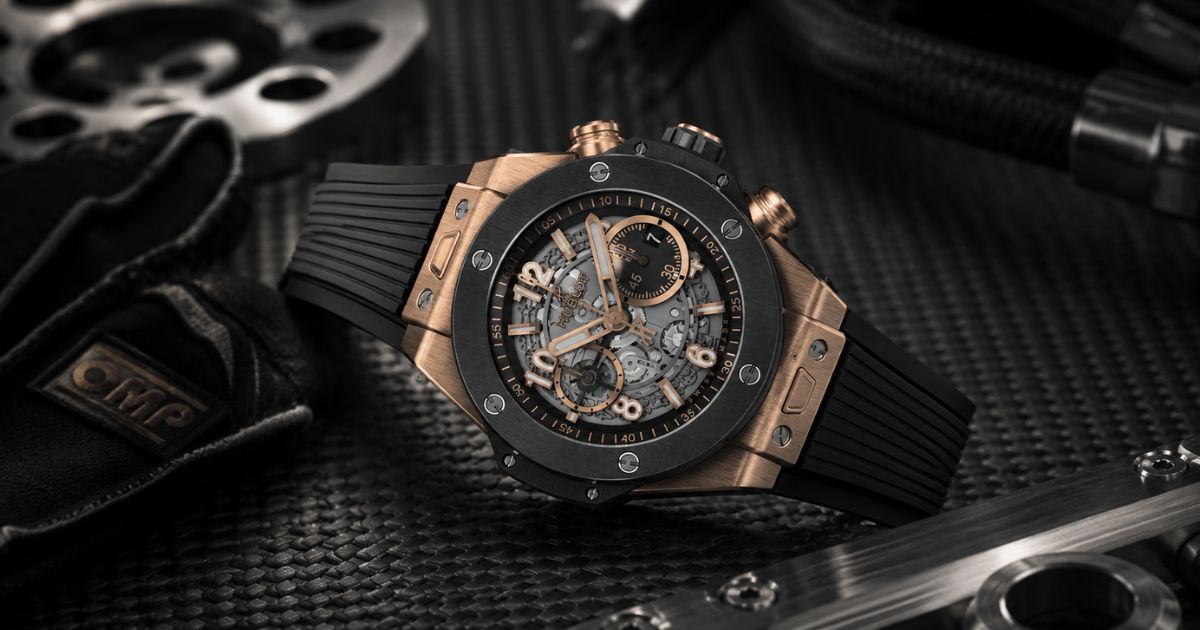
In the pantheon of Swiss watchmaking, Hublot often plays the role of the disruptor. Unlike brands that lean heavily on centuries of uninterrupted heritage, Hublot operates with a different mandate: innovation for innovation’s sake.
To the uninitiated, the brand might simply register as the “Big Bang” maker—those large, bold, screw-embellished timepieces favored by athletes and musicians. However, to dismiss Hublot as merely a marketing machine is to miss a profound shift in how modern horology is made. As one industry observer recently noted, “behind the pyrotechnics is a story that has rarely been told on its own, that of a brand that has consistently pursued the future of mechanical, technical watchmaking”.
This is the essence of The Art of Fusion. It isn’t just a tagline; it is a manufacturing philosophy. But what exactly makes Hublot unique in a sea of steel sports watches and dress pieces?
The Alchemists of Material Science
Most watch brands buy materials from specialized suppliers. Hublot has effectively become a materials science lab that happens to make watches. While other maisons debate the ratio of brass in an alloy, Hublot is literally inventing new substances.
Take Magic Gold, for instance. The industry standard for gold is that it is soft and scratches easily. Hublot decided that was unacceptable. They developed the world’s first scratch-resistant 18-carat gold. By fusing 24-carat gold with ceramic (boron carbide), they created an alloy that only a diamond can scratch. This isn’t a coating; it’s a structural transformation of the metal itself.
Then there is their mastery of Sapphire. While many brands use clear sapphire crystals, Hublot has mastered the difficult art of coloured sapphire. Creating a sapphire case in “Water Blue,” bright red, or neon yellow is notoriously difficult because the material is so hard and brittle; controlling the colour chemistry during the growth process is a nightmare. Hublot treats these technical hurdles as a playground, producing kaleidoscopic cases that seem to defy physics.
As CEO Julien Tornare puts it, this is about “moving the needle.” He notes that while many brands have barely changed in twenty years, Hublot’s R&D is focused on “sapphire in all its forms, next-gen ceramics, [and] composites” to create truly 3D wearable sculptures.
The Unico: A Movement Built Backwards
Where Hublot truly silences the skeptics is beneath the dial. For years, a criticism of Hublot’s entry-level pieces was the reliance on third-party movements. However, the evolution of the in-house Unico caliber (HUB1280) proves the brand’s serious horological credentials.
Most chronograph movements hide the ugly bits—the clutches, the column wheels, the springs—under a solid caseback. Hublot’s engineers did something radical: they flipped the script. The Unico movement was designed to be viewed from the dial side.
“The most significant aspect of the movement is that it employed a double horizontal clutch system… visible to the wearer”. You can see the column wheel at 6 o’clock, and the oscillating clutch at 8 o’clock, actively working as you press the pushers.
But the real genius lies in the tactile feedback. Usually, when you start a mechanical chronograph, there is a slight “jump” or shudder in the seconds hand due to the gears meshing. Hublot solved this using LIGA technology—a niche manufacturing process typically reserved for micro-electronics.
By creating “elastic” or sprung teeth on the chronograph clutch wheels, the Unico movement eliminates backlash. The result is a chronograph hand that starts with absolute fluidity and a pusher feel that one reviewer described as “dreamy”—neither squishy nor harsh.
The Paradox of Design: Wearable Sculpture
Let’s address the elephant in the room: the design. Hublots are not subtle. They are heavy, faceted, and architectural. However, when discussing the Art of Fusion, the design is never just aesthetic; it is structural.
Consider the Spirit of Big Bang Frosted Carbon. In a recent owner’s review, a watch collector noted that the “frosted carbon case doesn’t read like a gimmick; it reads like material used with intent.” Unlike polished metal, the frosted finish diffuses light and handles micro-marks better than steel. It feels “tactile” rather than merely decorative.
Furthermore, collaborations with designers like Samuel Ross (SR_A) show how Hublot uses design to exaggerate movement architecture. The collaboration pieces stretch the tonneau case into brutalist sculptures, yet they consistently highlight the mechanics within. The screws are not just jewelry; they are functional fasteners. The rubber strap is not just a comfort feature; it was the revolutionary fusion of 1980 that started this whole story by pairing precious gold with a mundane tire-tread material.
A Tale of Two Brands (And Why It Matters)
For the luxury learner, it is important to understand Hublot’s “split personality.” There is the accessible Classic Fusion line—entry-level luxury that trades heavily on design. Then there is the “high-end” Hublot: the MP (Manufacture Pieces) and the high-end Big Bangs.
As one analyst wisely put it, “judge the brand by its peaks, not its averages.” If you judge Rolex by a Cellini, you miss the point of the Submariner; similarly, if you judge Hublot solely by its entry quartz pieces, you miss the engineering marvel of the MP-13 Tourbillon or the 50-day power reserve of the MP-05.
The Verdict
What makes Hublot unique is their refusal to be bound by tradition. In an industry obsessed with patina and “vintage vibes,” Hublot is obsessed with the future. They are building a manufacturing capability that treats chemistry, micromechanics, and design as equal art forms.
The Art of Fusion is the courage to put a column wheel on the front of the watch. It is the insanity of trying to carve a tonneau case out of scratch-resistant sapphire. It is the realization that a rubber strap can be noble.
You don’t have to love the way a Hublot looks—it is often aggressively contemporary. But to deny its technical impact on Swiss watchmaking is to ignore the fact that the future of luxury is being forged right now, in Nyon, through the fusion of gold and ceramic.